• “Tradition does not vanish with modernity – it transforms, it continues, it reinvents itself.”
    - Magda Danysz
    Active Memory brings together eight major artists from the contemporary Chinese scene and offers a renewed reading of China’s cultural heritage. Rather than opposing past and present, the works on view show that tradition does not disappear with modernity. It transforms, extends and reinvents itself.


  • Legacy in transition

    Huang Rui, Zhang Dali, and Yang Yongliang embody three distinct ways of activating this memory. Huang Rui revisits structures of...

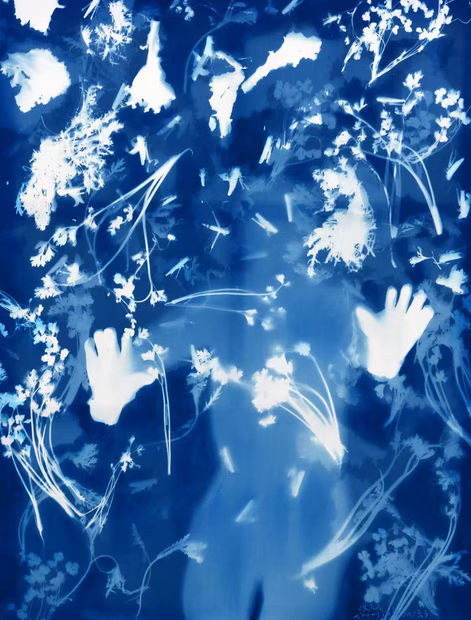
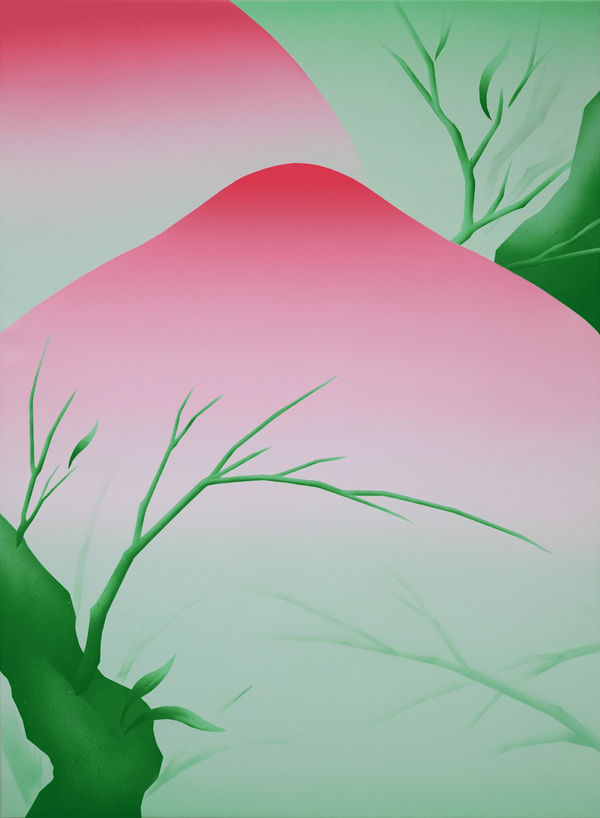
    Zhang Dali, Wild flowers, 2023

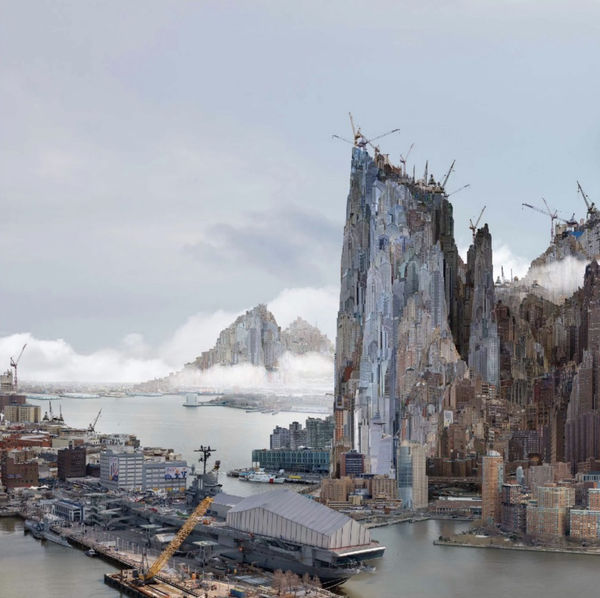
    Huang RuiZhang Dali, and Yang Yongliang embody three distinct ways of activating this memory. Huang Rui revisits structures of language and Chinese thought, in dialogue with the legacy of the Stars Art Group. Zhang Dali anchors his practice in China’s urban and social transformation, turning the environment into a moving archive. Yang Yongliang reinterprets classical shanshui landscape through a digital lens, where mountains are built from skyscrapers, pixels, and urban light.
    • Zhang Dali Colombe, 2023 Cyanotype on cotton and oil 150 x 120 cm 59 x 40 in
      Zhang Dali
      Colombe, 2023
      Cyanotype on cotton and oil
      150 x 120 cm
      59 x 40 in
    • Yang Yongliang Chinatown 唐 ⼈ 街 , 2024 Giclee Print on Fine Art Paper 60 x 60 cm 23 5/8 x 23 5/8 in Edition of 15
      Yang Yongliang
      Chinatown 唐 ⼈ 街 , 2024
      Giclee Print on Fine Art Paper
      60 x 60 cm
      23 5/8 x 23 5/8 in
      Edition of 15
    • Huang Rui Mao (Selected works of Mao Zedong, 4 volumes) - Barrier : Ink Stain - Records of Great Historians, 2025 Books, ink, stone, strings, marble base 26 x 28 x 21 cm 10 1/4 x 11 x 8 1/4 in
      Huang Rui
      Mao (Selected works of Mao Zedong, 4 volumes) - Barrier : Ink Stain - Records of Great Historians, 2025
      Books, ink, stone, strings, marble base
      26 x 28 x 21 cm
      10 1/4 x 11 x 8 1/4 in
    • Huang Rui One, Two, Three, Four, 2025 Oil on canvas 130 x 65 cm x 4 51 1/8 x 25 5/8 x 4
      Huang Rui
      One, Two, Three, Four, 2025
      Oil on canvas
      130 x 65 cm x 4
      51 1/8 x 25 5/8 x 4
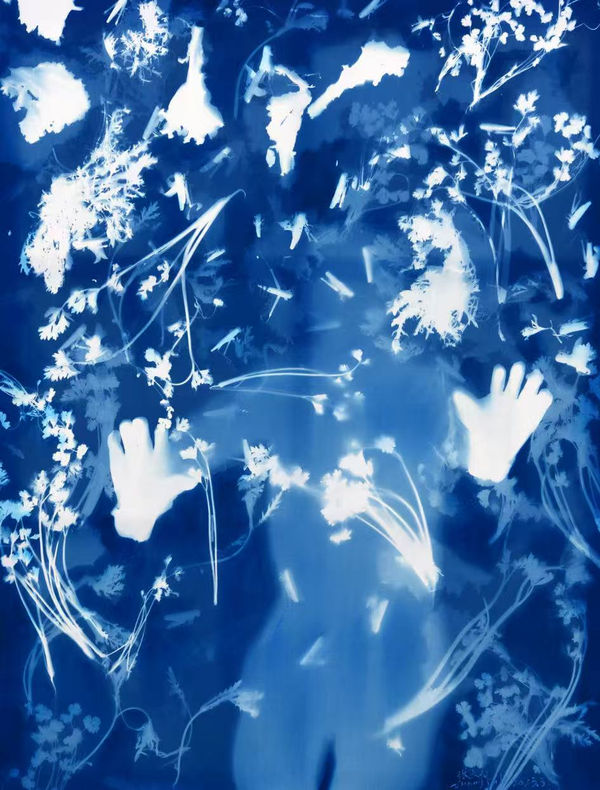
    • Zhang Dali Wild flowers, 2023 Cyanotype on cotton and oil 146 x 114 cm 57 1/2 x 44 7/8 in
      Zhang Dali
      Wild flowers, 2023
      Cyanotype on cotton and oil
      146 x 114 cm
      57 1/2 x 44 7/8 in
    • Yang Yongliang Riverbank 河 岸 , 2024 Giclee Print on Fine Art Paper 100 x 100 cm 39 x 39 in Edition of 15
      Yang Yongliang
      Riverbank 河 岸 , 2024
      Giclee Print on Fine Art Paper
      100 x 100 cm
      39 x 39 in
      Edition of 15
    • Huang Rui Nabokov (Lolita, 1 volume) - Barrier : Ink Stain - Records of Censured literature, 2025 Books, ink, stone, strings, marble base 25 x 30 x 21 cm 9 7/8 x 11 3/4 x 8 1/4 in
      Huang Rui
      Nabokov (Lolita, 1 volume) - Barrier : Ink Stain - Records of Censured literature, 2025
      Books, ink, stone, strings, marble base
      25 x 30 x 21 cm
      9 7/8 x 11 3/4 x 8 1/4 in
  • A pioneer of contemporary Chinese art, Huang Rui (born in 1952) founded the Xing Xing (“The Stars Art Group”) group in 1979, the first post-Maoist movement for freedom of expression. His multidisciplinary work blends modern abstraction with the traditional philosophy of the Yi Jing (“Book of Changes”). His work inextricably links political engagement, spatial aesthetics, and historical heritage.
     
    Born in Harbin in 1963, Zhang Dali is a leading contemporary Chinese artist and pioneer of urban art in China. After discovering graffiti in Italy, he made a lasting impression in 1995 with his series “Dialogue” in which he tagged giant profiles on buildings slated for demolition in Beijing. His multidisciplinary work, which includes sculpture, photography, and painting, explores themes of memory, social violence, and the brutal transformations of Chinese society.
     
    Yang Yongliang (born in 1980) reinterprets traditional shanshui through digital technologies such as photographic collage and 4K video. His monumental landscapes, which from a distance evoke classical ink paintings, reveal upon closer inspection megacities saturated with construction sites and urban infrastructure. Through this striking aesthetic, he explores the tensions between rampant modernity and cultural heritage, denouncing the impact of urbanization on nature.
  • Deconstruction of traditional writing

    Technological modernity is fully expressed in the work of aaajiao, a central figure of the new generation, whose works are...
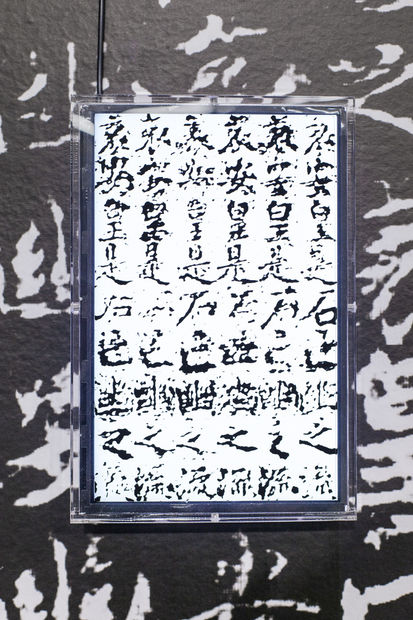
    aaajiao, Typeface, 2016
    Technological modernity is fully expressed in the work of aaajiao, a central figure of the new generation, whose works are held in the Centre Pompidou collections. His installation typeface relies on a neural network trained on ancient calligraphy to generate characters that resemble a language, yet no longer carry meaning – a gesture that stages both transmission and loss.
     
    Under the pseudonym aaajiao, Xu Wenkai (born in 1984) explores the boundaries between the real and the virtual. Based between Berlin and Shanghai, he uses code and installation to question how algorithms and data control are transforming our social consciousness. His work translates the complexity of data into visual experiences, capturing the essence of a society shaped by the virtual.
  • « Technology is a driving force for the art of our time. »

    -  Li Zhenhua

  • Stretch of tradition

    Li Hongbo works with paper, a material deeply rooted in Chinese history, transforming it into strikingly flexible sculptures, notably inspired...
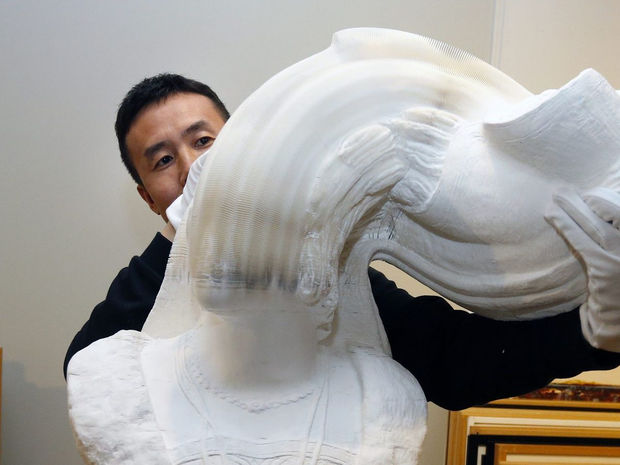
    Li Hongbo works with paper, a material deeply rooted in Chinese history, transforming it into strikingly flexible sculptures, notably inspired by Taihu scholar’s rocks, prized in literati gardens since the Song dynasty. Here, tradition is quite literally set in motion.
  • A Beijing-based artist born in 1974, Li Hongbo reimagines traditional paper lantern craftsmanship to reinvent sculpture. His process involves strategically stacking thousands of sheets, glued together point by point to create a honeycomb structure invisible to the naked eye. Appearing as rigid plaster busts, his creations unfold in space, transforming the human silhouette into an infinite geometric extension.
  • Connect the intimate with the universal

    Finally, Liu Bolin and Zelam Lim reintroduce the body and nature as spaces of reconciliation. Liu Bolin’s sculptures question visibility...

    Zelam Lim, Sonata IV, 2025

    Finally, Liu Bolin and Zelam Lim reintroduce the body and nature as spaces of reconciliation. Liu Bolin’s sculptures question visibility and erasure in an image-saturated society. Zelam Lim’s works bring together matter, myth, and organic presence, linking intimacy and inheritance through forms that feel unmistakably contemporary.
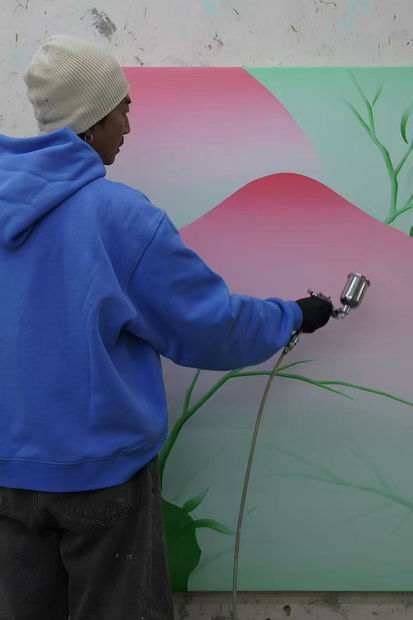
  • 'I grew up learning traditional Chinese painting, but discovering graffiti changed everything — suddenly I could paint freely on the...

    "I grew up learning traditional Chinese painting, but discovering graffiti changed everything — suddenly I could paint freely on the streets for everyone to see."

    - Zelam Lim

    Zelam Lim is an urban artist whose career began in 2003, evolving from graffiti to a broader spectrum of creative expression, with works now spanning across the globe.
    His practice defies convention, blending Eastern and Western cultures while exploring the boundaries between tradition and modernity, shaping a distinctive worldview.


  • Liu Bolin is a visual artist born in 1973 whose sculptural work questions the place of the individual. Initially trained in classical sculpture before the destruction of his studio in 2005 radicalized his approach, he explores the dissolution of identity by materializing a humanity swallowed up by technology. Through assemblages of electronic components, he transforms the body into a computer circuit to denounce the erasure of humanity in the face of digital progress.
     
     
  • From tradition to abstraction
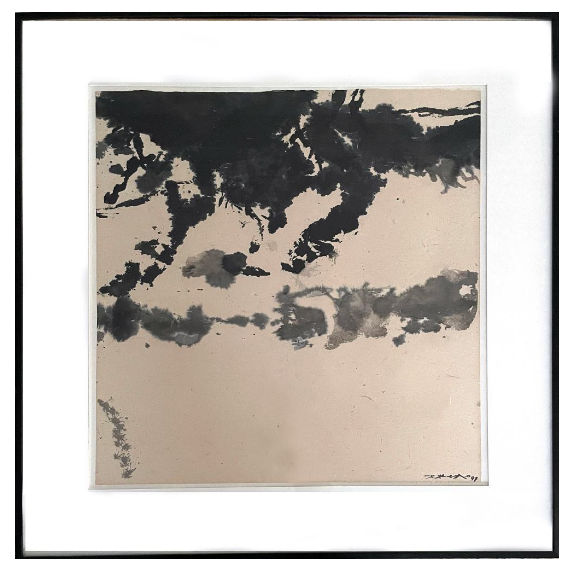
    Zao Wou-Ki, Untitled, 1997

    From tradition to abstraction

    Born in Beijing in 1920, Zao Wou-Ki settled in Paris in 1948, where his work gradually became part of the lyrical abstraction movement of the 1960s. Despite his initial training, he chose for a long time to distance himself from the practice of Chinese ink painting, even though he had mastered it perfectly. He explained this refusal by his desire not to give in to the easy option or to “fall into chinoiserie.”


    In the early 1970s, encouraged by his friend, the poet Henri Michaux, he returned to this technique, reinventing it through the prism of his journey between two cultures. His work thus succeeded in articulating the Chinese tradition of ink, based on the dialogue between fullness and emptiness, with the achievements of Western abstraction.


    A major artist on the post-war Parisian scene, Zao Wou-Ki is famous for combining Chinese ink and oil paint in a universal language. Born in China and naturalized as a French citizen, he transformed the classical landscape into an abstract epic of light and movement. His transition from figurative art to vast, gestural compositions expresses a spiritual quest in which emptiness becomes a dynamic force.